You have automated your PPC campaigns. Bid rules are running. Scripts are adjusting budgets when conversions spike. On paper, everything looks efficient.
So why are qualified leads slipping while spend keeps rising?
The issue is not automation itself. It is the kind of automation being used. Traditional rule-based PPC automation follows instructions well, but it does not understand context. It can make adjustments based on predefined inputs, yet still miss the broader patterns shaping campaign performance.
After managing millions in advertising spend, we have seen this happen repeatedly. Rule-based systems optimize for exactly what they are told to optimize, nothing more. That is useful up to a point, but it also creates limits that many advertisers do not see until performance starts to plateau.
The Hidden PPC Automation Limits of Traditional Systems
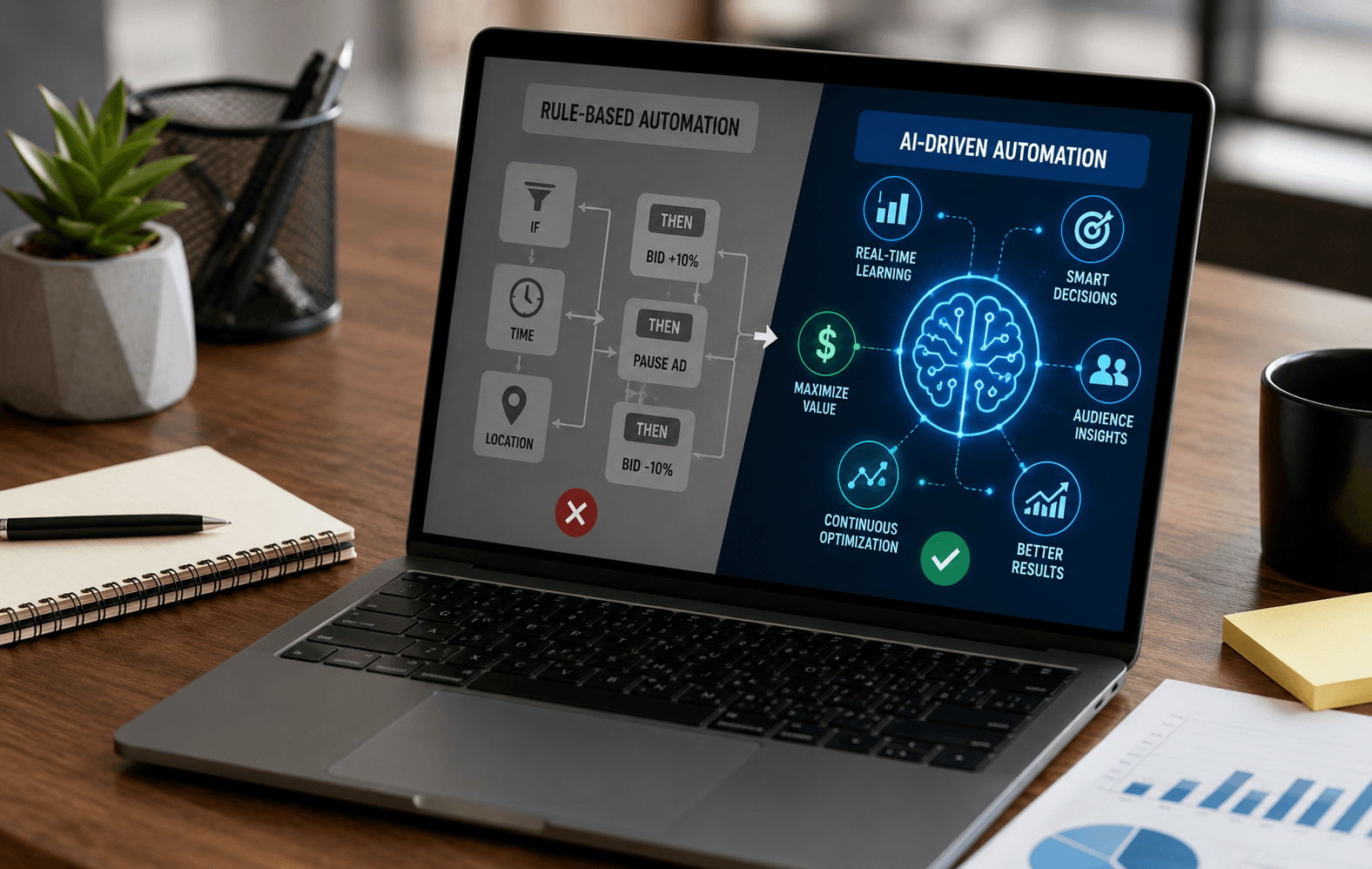
Rule-based automation runs on simple if-then logic. If cost per click rises above a set threshold, reduce the bid. If conversion rate falls below a target, pause the ad group. Those rules can help create consistency, but they only respond to the inputs they are given.
That is where PPC automation limits can trip you up.
These systems operate in isolation. They cannot connect a spike in conversions to a change happening elsewhere in the market. They also will not recognize that lower-cost clicks from a certain keyword may be driving high-value phone leads that your call tracking system identifies as strong opportunities.
Traditional automation usually focuses on:
- platform-specific conversion data
- historical performance within narrow timeframes
- predefined KPI thresholds
- single-channel attribution
What it often misses is just as important:
- cross-channel behavior patterns
- lead quality beyond the initial conversion
- seasonal shifts that need context
- attribution complexity when prospects convert by phone
That gap matters. Our patent-pending offline conversion tracking method has shown that many high-value customers research online before converting offline. In those cases, a rule-based system may pull back on the very keywords contributing to revenue, simply because it cannot see the full path to conversion.
AI vs Automation PPC: How AI-Driven Systems Think Differently
When comparing AI vs automation PPC, the real difference comes down to how decisions are made. Traditional automation follows fixed rules. AI looks for patterns across a much broader set of signals.
Rule-based systems are designed to act on the conditions you define. That can be useful for controlling bids, pacing budgets, or responding to simple performance changes. But they are limited to the logic already built into them.
AI-powered PPC management works differently. It can evaluate website analytics, CRM data, call tracking metrics, historical campaign performance, market conditions, and lead quality signals at the same time. That makes it better equipped to spot relationships that rule-based scripts, and even experienced teams working manually, may miss.
For example, an AI system may identify that clicks during certain hours generate fewer immediate conversions but lead to higher-value customers over time. A rule-based setup might reduce spend during those hours because short-term conversion data looks weaker. AI can recognize the broader pattern and surface that insight before a valuable opportunity is cut back.
PPC optimization AI adapts to:
- Multi-touch attribution complexity: Understanding that the click before the phone call deserves credit.
- Lead quality variations: Not all conversions generate equal revenue.
- Competitive landscape shifts: Adjusting strategy when market conditions change.
- Cross-platform insights: Connecting Google Analytics behavior to campaign performance.
That broader view helps teams make better decisions. Instead of optimizing around isolated platform metrics, they can focus on the signals that are more closely tied to revenue and long-term value.
The Strategic Layer Traditional Automation Can’t Provide
This is where AI campaign optimization becomes more valuable. It does not just help automate tasks. It helps uncover patterns and insights that can shape better strategy.
Rule-based automation is built to execute predefined actions. AI can go further by identifying anomalies, surfacing trends, and highlighting opportunities that deserve closer attention. That does not replace human expertise. It gives experienced marketers better information to work with.
At Full Circle SEM, our Google, Bing, and Facebook-certified professionals use AI-powered tools to strengthen analysis, not substitute for it. The combination of data-driven marketing specialists and machine learning creates a more adaptive and informed approach, and it forms the backbone of effective AI PPC Management.
The AI handles:
- Anomaly detection that flags issues before they drain budgets
- Predictive modeling for seasonal planning
- Budget allocation across campaigns based on incrementality, not just ROAS
- Creative performance analysis across audience segments
- Reporting that actually explains “why” instead of just “what”
That strategic layer is where traditional automation often falls short. It can follow instructions, but it cannot interpret the bigger picture in the same way.
Real Talk: PPC Automation Isn’t Set-It-And-Forget-It
Whether rule-based or AI-powered, automation requires strategic oversight. PPC isn’t for everyone, and automation is not a cure-all for poor strategy, weak offers, or ineffective landing pages.
The most effective approach combines AI’s pattern recognition with human strategic thinking. AI can surface opportunities, but experienced professionals still need to decide whether those opportunities align with business objectives and revenue goals.
At Full Circle SEM, we use AI tools to strengthen analysis while maintaining the rigor and transparency clients expect from a strategic partner. Our team serves Rochester, NY, Fort Lauderdale, FL, and clients across North America with a data-driven approach designed to reduce guesswork, whether the insight comes from traditional analytics, AI analysis, or our proprietary tracking methods.
Stop Optimizing for the Wrong Things
Rule-based automation optimizes for the signals you define. AI can help identify the signals that are more closely tied to real business results. That difference can shape lead quality, budget allocation, and measurable ROI.
If your competitors adopt AI-driven optimization before you do, they may gain an advantage in how quickly and effectively they respond to performance shifts. Contact Full Circle SEM today to learn how AI-driven PPC management can help improve advertising performance with a more strategic, data-driven approach.
